
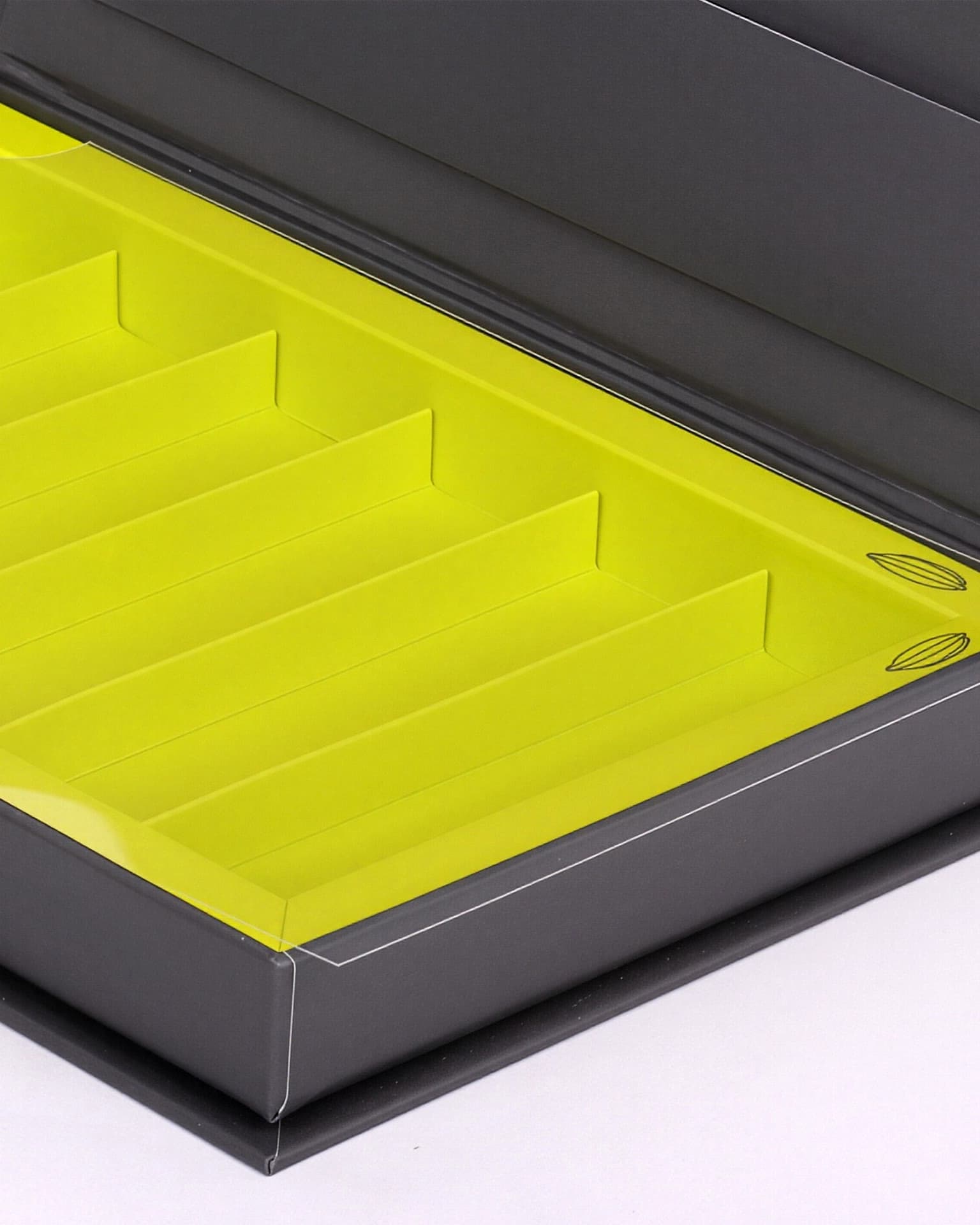
V-Groove vs. Die-Cutting in Custom Rigid Boxes: A Technical Comparison guide hero image for premium packaging decision support by Bellet Packaging
Buyer Guide

V-Groove vs. Die-Cutting in Custom Rigid Boxes: A Technical Comparison

V-groove and die-cutting are often discussed together in custom rigid packaging, but they solve different manufacturing problems. For premium rigid boxes, understanding the difference helps buyers ask better questions about structure, edge quality, sampling, and production feasibility.

Rigid box structureEdge quality comparisonSampling-ready questions
Expert Author
Jesse

Founder & Marketing Director

Reviewed and updated 2026-06-19

LinkedIn profile
Bellet-verified sourcing guidance for custom luxury packaging buyers.
Quick Answer

V-grooving creates controlled grooves in rigid board so a premium box can fold into sharper, cleaner corners. Die-cutting cuts flat shapes, windows, inserts, folding carton blanks, or structural components from sheet material. In custom rigid boxes, V-groove usually affects corner sharpness and structure quality, while die-cutting affects the shape, opening, insert, or flat component accuracy.

Why This Matters

Why This Matters

  • V-groove and die-cutting affect different parts of the packaging decision, so comparing them as if they are interchangeable can create confusion.
  • Sharper rigid box edges, clean opening lines, and stable corners usually require the right board structure and groove control, not only attractive artwork.
  • Die-cutting remains important for inserts, windows, folding cartons, sleeves, and some structural components that must be cut accurately from flat sheets.
  • Understanding the process difference helps buyers prepare better sample feedback before moving into mass production.
Key Takeaways

The Main Things Buyers Usually Need to Understand Earlier

Compare V-groove and die-cutting in custom rigid box manufacturing, including structure, edge quality, folding behavior, tooling use, sampling questions, and when each process matters.

V-groove is mainly about controlled bending and corner formation in rigid board.
Die-cutting is mainly about cutting shapes, openings, blanks, or insert components from sheet materials.
Rigid box projects may use both processes, especially when a box structure includes inserts, sleeves, windows, or folded components.
Buyers should review physical samples for corner sharpness, board exposure, fit, insert alignment, and finish behavior before production approval.

What V-Groove Means in Rigid Box Manufacturing

In premium rigid box manufacturing, V-grooving is used to create controlled grooves in rigid board before the board is folded or wrapped into shape. The goal is to help the board bend more cleanly at the corner line.

Without proper groove control, a rigid box can look bulky at the corners, show uneven edges, or feel less refined in the hand. This is why V-groove is often connected with sharp-corner rigid boxes, magnetic closure boxes, drawer boxes, and other premium structures.

For buyers, the important question is not only whether the supplier uses V-groove. The more useful question is whether the sample shows clean corner behavior, stable structure, and finish compatibility after wrapping and assembly.

  • Best connected to rigid board bending and corner formation.
  • Often relevant for setup boxes, magnetic boxes, drawer boxes, and shoulder-neck boxes.
  • Usually judged through physical sample review rather than artwork review alone.
  • Can influence perceived luxury because corners and edges are highly visible in hand.

What Die-Cutting Means in Packaging Production

Die-cutting uses tooling to cut sheet materials into specific shapes. In packaging, this can include folding carton blanks, paper sleeves, windows, insert shapes, labels, trays, or structural parts that need repeatable outlines.

For rigid box projects, die-cutting may still be involved even when V-groove is also used. For example, a rigid gift box may need a die-cut paper wrap, a sleeve, a window, a paper insert, or an accessory component that must match the product dimensions.

Die-cutting is therefore not a weaker or simpler alternative to V-groove. It is a different process used for different structural requirements.

  • Best connected to flat-sheet cutting, openings, and repeatable component shapes.
  • Commonly used for folding cartons, sleeves, windows, inserts, and paper components.
  • Can affect product fit, reveal quality, and assembly efficiency.
  • Needs accurate artwork, dielines, dimensions, and material choices before sampling.

V-Groove vs. Die-Cutting: Practical Comparison

FactorV-GrooveDie-Cutting
Main purposeCreate controlled grooves for cleaner board bendingCut flat materials into defined shapes or openings
Most relevant toRigid box corners, edge sharpness, setup structuresFolding blanks, windows, sleeves, inserts, and paper components
Buyer should inspectCorner sharpness, wrap behavior, board exposure, structure stabilityShape accuracy, fit, opening quality, alignment, and edge cleanliness
Common project usePremium rigid boxes, magnetic boxes, drawer boxes, shoulder-neck boxesFolding cartons, inserts, sleeves, windows, labels, paper trays
Sampling questionWill the physical sample show clean and stable corners?Will the die-cut component match product size and assembly needs?

When a Custom Rigid Box May Need Both Processes

Many premium packaging projects are not one-process decisions. A magnetic closure rigid box may require V-groove control for the main board structure while also using die-cutting for inserts, paper wraps, sleeves, or accessory components.

A jewelry box may need sharp rigid corners, but the insert must also be cut or shaped correctly to hold the product securely. A fragrance gift box may need a rigid structure with clean edges, plus a die-cut insert that controls bottle position during shipping and unboxing.

This is why a good packaging brief should describe the product, the desired opening experience, insert requirements, finish expectations, and target quantity instead of only asking for one process by name.

  • Magnetic rigid boxes may need groove control for the box and die-cutting for inserts or paper components.
  • Gift sets often combine rigid-board structure, insert engineering, and printed wraps.
  • Window packaging may need die-cut openings even when the outer structure is rigid.
  • Launch packaging should be sampled physically before buyers commit to production quantity.

How Buyers Should Review Samples

A physical sample is the best place to judge whether the chosen structure and process combination works. Renders can show the visual direction, but they cannot fully show corner behavior, material feel, insert fit, closure force, or assembly reality.

BELLET’s 3-business-day sampling scope applies to a handmade white structural sample based on the customer’s requested structure. Printed samples generally take 5–7 business days; final processes, accessories and timing are confirmed for the project.

  • Check whether rigid box corners look clean from multiple angles.
  • Review whether wrapped paper or specialty material behaves well around edges.
  • Test product fit, insert grip, opening movement, and closure stability.
  • Look for board exposure, uneven pressure marks, loose edges, or finish cracking.
  • Confirm whether the target MOQ, finish choices, and timeline remain practical after sample feedback.

Questions to Ask Before Requesting a Quote

A stronger packaging inquiry gives the supplier enough information to judge structure feasibility instead of guessing from a reference image. This is especially important for rigid boxes where structure, finish, and insert requirements affect both sample quality and production planning.

  • What product dimensions and weight should the box hold?
  • Does the project require a rigid setup box, magnetic closure box, drawer box, folding carton, sleeve, or mixed structure?
  • Is the priority sharper rigid corners, lower storage volume, insert security, or a specific opening experience?
  • Which finishes are required: foil stamping, embossing, debossing, matte lamination, soft-touch, spot UV, or specialty paper?
  • What target quantity, launch timeline, and sample approval deadline should the supplier plan around?

Where BELLET Fits

BELLET Packaging is a factory-direct custom packaging manufacturer focused on premium rigid boxes, magnetic boxes, jewelry boxes, and related high-end packaging projects for growing brands.

BELLET supports a 500-unit starting MOQ for rigid boxes, magnetic closure boxes, and cosmetic packaging, plus a handmade white structural sample in 3 business days. Process-specific tolerances, printed samples, and finish-complete samples are confirmed against the actual project.

Apply the guide to your product

Get a project-specific structure and sampling recommendation

Share the product dimensions, quantity, destination, finish direction, and launch timing. Unknown details can be clarified during the review.

Discuss Your Packaging Project
Common Buying Mistakes

Problems That Usually Slow Packaging Decisions Down

01

Asking only whether a supplier can make a rigid box without asking how corners, edges, and inserts will be produced.

02

Assuming die-cutting alone creates the sharp corner quality expected in premium rigid boxes.

03

Approving a render without checking whether the physical sample has clean corners, stable closure, and acceptable insert fit.

04

Choosing complex structures before confirming whether the required processes are practical at the target MOQ and timeline.

Guide FAQ

Questions Buyers Commonly Ask Around This Topic

These answers are written to make the buying process clearer before a project moves into sampling or quotation.

No. V-groove is mainly used to create controlled grooves in rigid board so corners can fold more cleanly. Die-cutting is mainly used to cut flat materials into specific shapes, openings, blanks, inserts, or components.

Want guidance applied to your own packaging project instead of just general reading?

Send your product type, dimensions, quantity, timing, and preferred packaging direction. We can recommend a more practical next step based on your actual use case.

Projects may start from 500 unitsSampling as fast as 3 business daysFinal terms depend on the brief